







BETTER FINANCE. International Investors’ Conference about Europe’s competitive skills
DSW/BETTER FINANCE: International Investors’ Conference about Europe’s competitive skills
— di Annachiara De Rubeis —
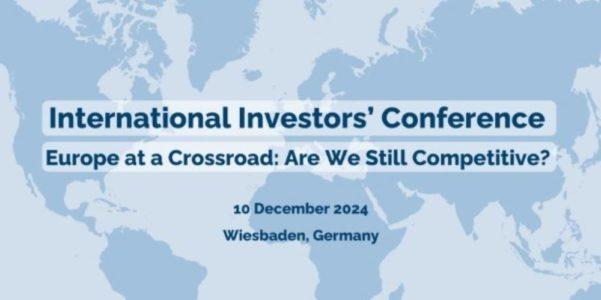
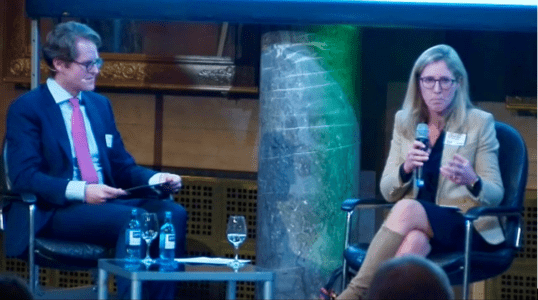 A great support to conclude the work before the Christmas holidays and the start of new year: the International Investors’ Conference, Europe at a crossroad: are we still competitive?, organised by Better Finance, took place in Wiesbaden, Germany, on the 10th of December 2024 to analyze the risks and solutions of economy cooperation in Europe.
In particular, the 11 panel entitled ‘How to build resilience and strategy in Europe’s complex landscape?’ featured economists such as Christina Bannier, professor of Banking and Finance at Universität Giessen, Rainier van Roessel, Chairman of the Supervisory Board Lanxess and Christine Wolff, Supervisory Board member Sweco.

What are the difficulties of businesses in the European Union?
As Christina Bannier says, Europe is strong in many sectors such as manufacturing, technology; perspectives on robotics would be a great step forward in the future. According to Christine Wolff it needs to be creative to face new challenges. But, according to Rainier van Roessel, there’s another solution to face the progress: if we want to bring Europe to the heading, companies need to compete with each other, instead of investing in businesses abroad because of the less costs, but instead, investing in all the sectors in which we are already strong.
The object of research. Sustainable finance, corporate governance and compliance as well as data analysis
With the action plan “Financing sustainable growth”, in 2018 the EU Commission launched a package of regulatory measures whose main objective is to increase transparency of sustainable economic activities.
“Sustainability disclosures have now become standard for lenders and investors. For example, quite a few banks have made decarbonization in their loan portfolio a core objective of their executive compensation. A clear and irreversible focus on corresponding aspects in the lending process should therefore come as no surprise” writes the professor Christina Bannier.
The new Corporate Sustainability Reporting Guideline (CSRD), for the first time from fiscal year 2025/2026, develops guidelines for sustainable governance in medium-sized companies in Germany, especially to collect sustainability data.
Difficulties:
-the (still ongoing) uncertainty about which data should be specifically collected and published;
-the seemingly enormous amount of information required;
-the additional costs of setting up and operating a corresponding information and control system.
One of the sectors where sustainability clauses are already applied in Germany is the chemical sector, although the automotive sector is particularly important, of which customers are increasingly demanding or simply waiting for detailed information on sustainability.
The elephant in the room: sustainability reporting in medium-sized companies
The materiality analysis answers the very simple but fundamental business question: “What is important for our business, how do we generate profitability, what risks affect us?”
• The question is whether our products will still be attractive to new customer groups in the future.
• Or about what expectations employees have of the company, beyond the wages they receive.
• And also, whether raw materials and intermediate goods will still be available in the future in the same form and under the same conditions, or whether (inter)national regulations will force other procurement channels and modalities.
Rainier van Roessel suggests that the problem is there’s too much bureaucracy, too many directives, while it just would be easier with recommendations to provide solutions for future actions.
And when the moderator Johannes Hanshen, of Audit Committee Institute, asked: “What do we wish for Christmas?”, to take a pause from work, if we love it so hard… said amused Christina Bannier at the end of the panel.
 Articolo pubblicato con l’ausilio del sistema di Redazione AI AGENTICA di Datamoney, e supervisione umana finale.
Le notizie più lette su LaMiaFinanza









 ✨ Classifica generata dalla Agentic AI (REDAZIONE AI) di Datamoney.ch

 VIDEO INTERVISTE
 Motori
 REAL ESTATE
 LMF crypto
 LMF food
 LMF private markets
 LMF arte
 Legal
Legal LMF green